Independent guides and articles about the Instadapp DeFi stack
The independent handbook for the Instadapp DeFi stack
Five in-depth guides, six explainer articles and a linked glossary that turn the Instadapp ecosystem — smart accounts, Lite vaults, Pro dashboard, Avocado and Fluid — into something you can actually navigate.

Instadapp started as a single dashboard that let people manage MakerDAO vaults without touching a block explorer, and it grew into a full middleware layer for decentralised finance. Today the ecosystem spans the DSA smart account layer, the Instadapp Pro dashboard, the automated Instadapp Lite vaults, the Avocado smart wallet and the Fluid liquidity protocol. Each piece solves a different problem, and each piece has its own mental model. This handbook exists because that learning curve is steep and the official documentation is written for people who already know the vocabulary.
Every page here is written from the perspective of somebody who has to make a decision: should I refinance a loan, is a flash loan the right tool, what does a health factor of 1.2 actually mean for my position on a volatile day. We keep the terminology consistent, we link the first mention of every technical term to the glossary, and we say plainly when something carries risk.
The handbook is published in English, Spanish and German. Each language version is a full translation with its own metadata, its own glossary anchors and its own internal linking, so a reader in Madrid or Berlin gets the same depth as a reader in London.
Instadapp guides: from first connection to advanced strategies

Getting started with Instadapp: your first safe session
A careful first session with Instadapp: wallet setup, creating a smart account, reading the dashboard, making a first supply and the safety checks to run before every transaction.
Read the guide →
How to use Instadapp Lite: automation without the dashboard
A practical guide to Instadapp Lite: how the automated ETH vaults work, how to deposit and withdraw, how net APY is produced and what risks the automation does not remove.
Read the guide →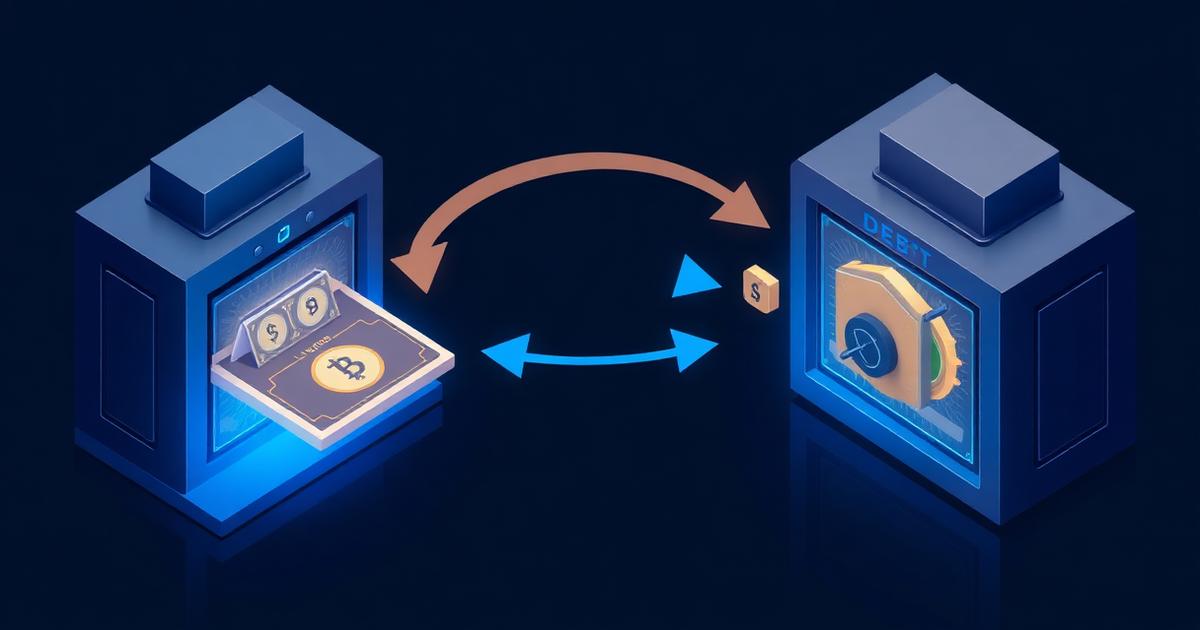
Refinance debt with Instadapp: moving a loan without closing it
How to refinance a DeFi loan with Instadapp: comparing rates across Aave, Compound and Maker, executing an atomic migration with a flash loan, and calculating whether it pays.
Read the guide →
Flash loans on Instadapp: borrowing millions for fifteen seconds
A practical guide to flash loans on Instadapp: the atomic borrow-and-repay mechanism, the 0.09 percent fee, realistic use cases, and how to model whether a flash loan is profitable.
Read the guide →
Instadapp DSA smart accounts: the layer everything else stands on
How Instadapp DSA smart accounts work: connectors, atomic transaction bundles, authorities and delegation, plus practical patterns for managing multiple accounts safely.
Read the guide →
How to connect your wallet to Instadapp
A practical guide to connecting MetaMask, Rabby, WalletConnect and hardware wallets to Instadapp, switching networks correctly, and fixing common connection problems.
Read the guide →
Instadapp liquidation risk: understanding your health factor
How liquidation actually works on Instadapp-connected lending protocols, what the health factor means, typical penalties, and how to avoid getting liquidated.
Read the guide →
Instadapp yield strategies: how the main approaches actually work
The main yield strategies available through Instadapp: leveraged staking loops, stablecoin lending, and Fluid vaults, with their respective risk and return tradeoffs.
Read the guide →
How to withdraw from Instadapp: Lite, Fluid and DSA positions
A practical guide to withdrawing funds from Instadapp Lite vaults, Fluid positions and DSA smart accounts, including repaying debt first and fixing stuck withdrawals.
Read the guide →Instadapp articles: understanding the products behind the buttons
What is Instadapp? A middleware layer for decentralised finance
Instadapp explained from first principles: its origins as a MakerDAO dashboard, the smart account layer, the product family today, and who the platform is genuinely built for.
Read the article →
The Instadapp Pro dashboard explained, panel by panel
A walkthrough of the Instadapp Pro dashboard: the overview metrics, DeFi assets list, protocol panels, balance sidebar and the automation tools that sit behind them.
Read the article →
Instadapp vs DeFi Saver: which DeFi manager fits your strategy?
Instadapp compared with DeFi Saver across automation, protocol coverage, simulation tools, fees and target users, including where each platform is genuinely the better choice.
Read the article →
Avocado: the Instadapp wallet that hides the multi-chain mess
How the Avocado smart wallet from Instadapp works: paying gas in one currency across networks, the multi-chain single address model, and the trade-offs of the relayer design.
Read the article →
Fluid: how Instadapp merged lending, borrowing and a DEX
Fluid explained: how Instadapp's unified liquidity layer merges lending, borrowing, a DEX and vaults, why smart collateral raises capital efficiency, and what risks concentration brings.
Read the article →
Instadapp security and risk: what can actually go wrong
The real risk categories for Instadapp users: smart contract and connector risk, oracle failure, liquidation, automation limits, governance and phishing, with practical mitigations.
Read the article →
Is Instadapp safe? What the risk actually looks like
An independent look at Instadapp's safety record: audits, smart contract risk, past incidents, custody model and how it compares with using lending protocols directly.
Read the article →
Instadapp fees: what you pay beyond the headline zero
A breakdown of the costs of using Instadapp: gas fees, flash loan premiums, Instadapp Lite performance fees and how they compare to using protocols directly.
Read the article →
Instadapp supported networks: where you can actually use it
Which blockchain networks Instadapp supports today, how the experience differs between them, and what to check before moving a position across chains.
Read the article →
Instadapp Fluid vs Instadapp Lite: two different products, two different jobs
Comparing Instadapp Fluid's unified liquidity protocol with Instadapp Lite's automated vaults: how they differ in design, risk and who each one suits.
Read the article →
Instadapp alternatives: how the main DeFi dashboards compare
An honest comparison of Instadapp with DeFi Saver, Zapper, Furucombo and Zerion, covering what each tool does well and where Instadapp fits by comparison.
Read the article →
Instadapp vs Zapper: automation engine or portfolio dashboard
Instadapp and Zapper solve different problems: automated leverage management versus multi-chain portfolio tracking. Here is an honest comparison.
Read the article →
Instadapp vs Furucombo: structured automation or custom combos
Comparing Instadapp's guided smart-account products with Furucombo's visual transaction builder, and who each approach actually suits.
Read the article →
Instadapp Fluid APY: what the number on screen actually means
How Fluid's lending, vault and liquidity APYs are actually calculated, what drives them up or down, and how to read the numbers shown in the dashboard.
Read the article →
Instadapp gas costs: what you actually pay per transaction
How much gas Instadapp transactions actually cost, how bundling saves money, the difference between mainnet and layer twos, and when to time transactions.
Read the article →What the Instadapp ecosystem actually contains
The core of Instadapp is the DSA smart account: a contract wallet that holds your positions and executes bundles of actions atomically. On top of it sits Instadapp Pro, the dashboard that speaks to Aave, Compound, MakerDAO and Morpho through a single interface. Instadapp Lite packages the most common leveraged staking strategy into a one-click vault, while Avocado abstracts gas and network switching away from the user.
Fluid is the newest layer and the most ambitious: a unified liquidity protocol that combines lending, borrowing, a DEX and vaults inside one accounting engine, so the same capital can back several use cases at once. Understanding how these layers stack is the single most useful thing a new user can do, and it is where our guides start.
How this Instadapp handbook is organised
Guides are procedural. They assume you want to do something — connect a wallet, open a Lite position, refinance debt from one protocol to another, run a flash loan — and they walk through the sequence, the costs and the failure modes. Articles are conceptual. They explain what a product is, how it compares to alternatives, and what trade-offs it carries.
The glossary holds eighteen definitions with permanent anchors. Whenever a guide or article mentions a term such as collateral, liquidation or health factor for the first time, that mention links straight to the definition, so you never have to leave the page to look something up and then find your place again.
Who benefits from an independent Instadapp resource
Newcomers get a vocabulary and a safe path to a first transaction. Intermediate users get the operational detail that product pages leave out: what happens when a refinance transaction reverts halfway, why a flash loan fee of 0.09 percent can still be profitable, how gas costs behave on a layer two versus Ethereum mainnet.
Researchers and writers get a stable, citable structure with consistent naming across three languages. Nothing on this site asks you to connect a wallet, sign a message or deposit funds, because reading should never require exposure.
Frequently asked questions
+Is this the official Instadapp website?
No. This is an independent educational handbook. The official product lives at instadapp.io; we document, explain and compare it, but we do not operate it and we cannot execute transactions on your behalf.
+Do I need to know Solidity to use Instadapp?
No. The Pro dashboard and Lite vaults are designed for people who have never read a contract. Knowing what a smart account does helps you understand why a single click can trigger several on-chain actions, and our guides explain that without code.
+Which Instadapp guide should I read first if I am completely new?
Start with the getting-started guide, then read the article on what Instadapp is. Together they take about twenty minutes and cover the vocabulary used everywhere else on the site.
+How often is the content on this Instadapp handbook updated?
Each page carries a visible update date and the same date is published in the sitemap as lastmod. We revise pages when a protocol changes materially rather than on a fixed schedule.
+Can I read the Instadapp guides in Spanish or German?
Yes. Every guide, article and glossary entry exists in English, Spanish and German at /es/ and /de/, with hreflang annotations so search engines serve the right version.